
Harlan TD.88137 高脂饲料 Adjusted Kcal Diet (42% from fat)
Harlan Teklad动物饲料
Harlan代理
欢迎新老客户访问Harlan官网或者咨询中国代理商上海金畔生物获取更多详细资料。
Harlan TD.88137 高脂饲料 Adjusted Kcal Diet (42% from fat)
A staple of atherosclerosis research
More than 25 years ago, our nutritionists collaborated with researchers at Rockefeller University to develop a diet with features of a ‘Western Diet’ to characterize and enhance atherosclerosis development in their newly generated Apoe deficient mouse model. With over 200 unique users worldwide, TD.88137 continues to be fed to genetically modified cardiovascular models to accelerate and enhance hypercholesterolemia and plaque formation.
Formula g/Kg
Casein 195.0
DL-Methionine 3.0
Sucrose 341.46
Corn Starch 150.0
Andydrous Milkfat 210.0
Cholesterol 1.5
Cellulose 50.0
Mineral Mix, AIN-76 (170915) 35.0
Calcium Carbonate 4.0
Vitamin Mix, Teklad (40060) 10.0
Ethoxyquin 0.04
Critical dietary features of TD.88137 related to atherosclerosis development include:
++Cholesterol (0.2% total cholesterol)
++Total fat (21% by weight; 42% kcal from fat)
++High in saturated fatty acids (>60% of total fatty acids)
++High sucrose (34% by weight)
Typical fatty acid profile of TD.88137
Typical fatty acid analysis,% of diet1 Mean SD
Total 20.7 1.5
Saturated fat 12.8 0.8
Monounsaturated fat 5.6 0.5
Polyunsaturated fat 1.0 0.2
Unknown2 1.3 0.3
Selected nutrient information1
Key points from the literature
TD.88137 has been used to accelerate atherosclerosis development in Apoe and Ldlr deficient models:
++In Apoe deficient mice, plasma cholesterol triples to >1500 mg/dL within three weeks (1, 2). Foam cell and lesion development occurs within 6-10 weeks
(2-4). Fibrous plaque formation is observed at 15 weeks with the development of fibrous caps after 20 weeks (2).
++Ldlr deficient mice fed for two weeks increase plasma cholesterol to >800 mg/dL and triglyceride to >300 mg/dL (5). After six weeks of feeding, hyperglycemia, hyperinsulinemia and dyslipidemia develop with small foam cell lesions in the aortic
arch (6, 7).
With over 420 citations, uses of TD.88137 continue to evolve and include atherosclerosis, obesity, non-alcoholic steatohepatitis (NASH), osteoporosis,
hypertension and metabolic syndrome. Contact us for a more extensive reference list.
Control diet options for TD.88137
Natural ingredient diets
++Also referred to as standard diets or chow
++Diets differ in the source and level of nutrients as well as the presence of non-nutritive factors (such as phytates or phytoestrogens) compared
to TD.88137
++Limits inferences to differences in dietary pattern versus a specific dietary component
Ingredient matched, low fat diets
++Controls for the type of ingredients, non-nutritive components and the source and level of specific nutrients
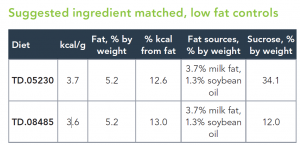
++Suggested ingredient matched, low fat dietary controls for TD.88137 listed below; data sheets can be found on our website at envigo.com
Suggested ingredient matched, low fat controls
References 参考文献
1. Plump, A.S., et al., Severe hypercholesterolemia and atherosclerosis in
apolipoprotein E-deficient mice created by homologous recombination in
ES cells. Cell, 1992. 71(2): p. 343-53.
2. Nakashima, Y., et al., Apoe-deficient mice develop lesions of all phases of
atherosclerosis throughout the arterial tree. Arterioscler Thromb, 1994.
14(1): p. 133-40.
3. Febbraio, M., et al., Targeted disruption of the class B scavenger receptor
CD36 protects against atherosclerotic lesion development in mice.
J Clin Invest, 2000. 105(8): p. 1049-56.
4. Nakashima, Y., et al., Upregulation of VCAM-1 and ICAM-1 at atherosclerosis-prone
sites on the endothelium in the Apoe-deficient mouse. Arterioscler Thromb
Vasc Biol, 1998. 18(5): p. 842-51.
5. Towler, D.A., et al., Diet-induced diabetes activates an osteogenic gene regulatory
program in the aortas of low density lipoprotein receptor-deficient mice.
J Biol Chem, 1998. 273(46): p. 30427-34.
6. Tsuchiya, K., et al., FoxOs integrate pleiotropic actions of insulin in vascular
endothelium to protect mice from atherosclerosis. Cell Metab, 2012. 15(3): p. 372-81.
7. Huszar, D., et al., Increased LDL cholesterol and atherosclerosis in LDL receptordeficient
mice with attenuated expression of scavenger receptor B1. Arterioscler
Thromb Vasc Biol, 2000. 20(4): p. 1068-73.
8. Yang, B., et al., Changes of skeletal muscle adiponectin content in diet-induced
insulin resistant rats. Biochem Biophys Res Commun, 2006. 341(1): p. 209-17.
9. Schafer, K., et al., Leptin promotes vascular remodeling and neointimal growth
in mice. Arterioscler Thromb Vasc Biol, 2004. 24(1): p. 112-7.
10. Lijnen, H.R., et al., Nutritionally induced obesity is attenuated in transgenic mice
overexpressing plasminogen activator inhibitor-1. Arterioscler Thromb Vasc
Biol, 2003. 23(1): p. 78-84.
11. Maquoi, E., et al., Modulation of adipose tissue expression of murine matrix
metalloproteinases and their tissue inhibitors with obesity. Diabetes, 2002.
51(4): p. 1093-101.
12. VanSaun MN, et al. 2009. High fat diet induced hepatic steatosis establishes a
permissive microenvironment for colorectal metastases and promotes primary
dysplasia in a murine model. Am J Pathol 175:355-64.
13. Dixon LJ, et al. 2013. Caspase-1 as a central regulator of high fat diet-induced
non-alcoholic steatohepatitis. PLoS One 8:e56100.
标签归档:harlan官网
Harlan 动脉粥样硬化(胆固醇、脂肪、胆酸盐) 饲料Atherogenic
Harlan 动脉粥样硬化(胆固醇、脂肪、胆酸盐) 饲料Atherogenic
Harlan Teklad动物饲料
Harlan代理
欢迎新老客户访问Harlan官网或者咨询中国代理商上海金畔生物获取更多详细资料。
Harlan 动脉粥样硬化(胆固醇、脂肪、胆酸盐) 饲料Atherogenic
Atherogenic
| Research use | Key dietary features | Examples |
| “Western” purified atherogenic diet | ||
| Accelerated hypercholesterolemia and plaque formation in genetically modified models such as Apoe and Ldlr deficient mice. Used for diet induced obesity in a variety of rodent models. |
High fat diet (20 – 23% by weight; 40 – 45% kcal from fat) Saturated fatty acids (SFA >60% of total fatty acids) Milkfat/butterfat Sucrose (34% by weight) Cholesterol (0.2% total) |
TD.88137 TD.10885 |
| “Western” purified atherogenic diet with added cholesterol and cholate source* | ||
| Induce hypercholesterolemia and mild atherosclerosis (foam cells, fatty streaks) in primarily wild type mice and rats. Will not promote obesity. |
High fat diet (15 – 20% by weight; 34 – 45% kcal from fat) Saturated fatty acids (SFA >55% of total fatty acids) Milkfat/butterfat, cocoa butter Sucrose (30-50% by weight) Cholesterol (1 – 1.25%) Cholate Source (0.5%)* |
TD.02028 TD.09237 |
| Hybrid high fat diets with added cholesterol and cholate source* | ||
| Induce hypercholesterolemia and mild atherosclerosis (foam cells, fatty streaks) in primarily wild type mice and rats. Will not promote obesity. Also used for lithogenic (gallstone) rodent studies. |
75% rodent breeder diet; 25% purified ingredients High fat (~15% by weight; 37% kcal from fat) Saturated fatty acids (SFA >45% of total fatty acids) Cholesterol (1.25%) Cholate source (0.5%)* |
TD.88051 TD.90221 |
| Standard diets with added cholesterol | ||
| Induce hypercholesterolemia in genetically modified and wild type models without promoting obesity. | Standard, grain-based rodent diet Minimal/moderate phytoestrogen diets recommended Cholesterol (1 – 4%) |
TD.120097 TD.07841 TD.01383 |
*Sodium cholate or cholic acid aid cholesterol and fat absorption and reduce cholesterol disposal via bile acid synthesis. However, if including a cholate source is not desired for your research, diets without cholate are available.
*Sodium cholate or cholic acid aid cholesterol and fat absorption and reduce cholesterol disposal via bile acid synthesis.However, if including a cholate source is not desired for your research, diets without cholate are available.
在实验动物模型中,饮食是诱导或加速动脉粥样硬化的有用工具。用于诱发啮齿类动物动脉粥样硬化的主要饮食特征因研究模型、所需终点和喂养时间的不同而不同。尽管动脉粥样硬化饮食的配方在不断发展,但文献中详细描述的备选方案概述如下。有关每个饮食选项和文献参考的更多信息,请参见节目表后面的可扩展选项卡。
| 研究用途 | 主要饮食特征 | 实例 |
|---|---|---|
| “西方”纯正致动脉粥样硬化饮食 | ||
| 加速高胆固醇血症和斑块形成的转基因模型,如APOE和Ldlr缺乏的小鼠。 用于饮食诱导肥胖的各种啮齿动物模型。 |
|
TD.88137 TD.10885 |
| 添加胆固醇和胆酸来源的“西方”纯动脉粥样硬化饮食* | ||
| 在野生型小鼠和大鼠中诱导高胆固醇血症和轻度动脉粥样硬化(泡沫细胞、脂肪条纹)。 不会助长肥胖。 |
|
TD.02028 TD.09237 |
| 添加胆固醇和胆酸盐的混合高脂饮食* | ||
| 在野生型小鼠和大鼠中诱导高胆固醇血症和轻度动脉粥样硬化(泡沫细胞、脂肪条纹)。 不会助长肥胖。 也用于造石(胆石)啮齿动物的研究。 |
|
TD.88051 TD.90221 |
| 添加胆固醇的标准饮食 | ||
| 在转基因和野生型模型中诱导高胆固醇血症而不促进肥胖。 |
|
TD.120097 TD.07841 TD.01383 |
*胆酸钠或胆酸有助胆固醇和脂肪的吸收,并可透过胆汁酸合成减少胆固醇的排出。然而,如果你的研究不想包括胆酸盐的来源,没有胆酸盐的饮食是可用的。
“Western” purified atherogenic diet
“Western” style diets are fed to genetically-modified cardiovascular models, such as Apoe and Ldlr deficient mice, to accelerate and enhance hypercholesterolemia and plaque formation and to elicit phenotypes commonly associated with metabolic syndrome.Within the atherogenic literature, a “Western” diet typically is described as a purified rodent diet with 20-23% milkfat/butterfat, 0.2% total cholesterol, and 34% sucrose by weight.TD.88137is an example of a “Western” style diet that was originally designed to characterize and enhance atherosclerosis development in a newly generated Apoe-deficient mouse model.Contact us for more information about “Western” style diets, modifications, or possible control diets.
Examples:
TD.88137Adjusted calories diet (42% from fat, 0.2% total cholesterol)
TD.1088545% fat Kcal diet (0.2% total cholesterol)
Research use:
Accelerated hypercholesterolemia and plaque formation in genetically-modified models, such as Apoe and Ldlr deficient mice.
Used for diet-induced obesity in a variety of rodent models.
Key dietary features:
High Fat Diet (20-23% by weight; 40 – 45% kcal from fat)
Saturated fatty acids (SFA >60% of total fatty acids)
Milkfat/butterfat
Sucrose (34% by weight)
Cholesterol (0.2% total)
References:
1.Febbraio, M., et al., Targeted disruption of the class B scavenger receptor CD36 protects against atherosclerotic lesion development in mice.J Clin Invest, 2000.105(8): p.1049-56.
2.Huszar, D., et al., Increased LDL cholesterol and atherosclerosis in LDL receptor-deficient mice with attenuated expression of scavenger receptor B1.Arterioscler Thromb Vasc Biol, 2000.20(4): p.1068-73.
3.Nakashima, Y., et al., ApoE-deficient mice develop lesions of all phases of atherosclerosis throughout the arterial tree.Arterioscler Thromb, 1994.14(1): p.133-40.
4.Nakashima, Y., et al., Upregulation of VCAM-1 and ICAM-1 at atherosclerosis-prone sites on the endothelium in the ApoE-deficient mouse.Arterioscler Thromb Vasc Biol, 1998.18(5): p.842-51.
5.Plump, A.S., et al., Severe hypercholesterolemia and atherosclerosis in apolipoprotein E-deficient mice created by homologous recombination in ES cells.Cell, 1992.71(2): p.343-53.
6.Towler, D.A., et al., Diet-induced diabetes activates an osteogenic gene regulatory program in the aortas of low density lipoprotein receptor-deficient mice.J Biol Chem, 1998.273(46): p.30427-34.
7,Tsuchiya, K., et al., FoxOs integrate pleiotropic actions of insulin in vascular endothelium to protect mice from atherosclerosis.Cell Metab, 2012.15(3): p.372-81.
“Western” purified atherogenic diet with added cholesterol and cholate source*
Wild type mice and rats generally are resistant to atherosclerosis, requiring more extreme dietary manipulation to modify lipoprotein profiles and develop mild atherosclerosis (foam cells, fatty streaks).Modern formulations are made completely of purified ingredients because this more refined approach has been reported to decrease the incidence of gallstones and liver damage associated with less refined and more traditional dietary approaches.To induce mild atherosclerosis in wild type animals, the “Western” purified diet can be modified to increase cholesterol (1-1.25%) and add a bile salt such as sodium cholate or cholic acid.Contact us for more information, modifications, or possible control diets.
Examples of purified high fat diets with added cholesterol and cholate source*:
TD.0202821% milkfat (1.25% cholesterol, 0.5% cholic acid)
TD.0923715% milkfat diet (1% cholesterol, 0.5% sodium cholate)
Examples of purified high fat diets with added cholesterol (without cholate source):
TD.9612121% milkfat (1.25% cholesterol)
Research Use:
Induce hypercholesterolemia and mild atherosclerosis (foam cells, fatty streaks) primarily in wild type mice and rats.
Will not promote obesity.
Key dietary features:
High fat diet (15-20% by weight; 34 – 45% kcal from fat)
Saturated fatty acids (SFA >55% of total fatty acids)
Milkfat/butterfat, cocoa butter
Sucrose (30-50% by weight)
Cholesterol (1 – 1.25%)
Cholate source (0.5%)*
References:
1.Bernal, C., et al., Lipid biomarkers and metabolic effects of lycopene from tomato juice on liver of rats with induced hepatic steatosis.J Nutr Biochem, 2013.24(11): p.1870-81.
2.Gao, Q., et al., Atherogenic diets exacerbate colitis in mice deficient in glutathione peroxidase.Inflamm Bowel Dis, 2010.16(12): p.2043-54.
3.Lichtman, A.H., et al., Hyperlipidemia and atherosclerotic lesion development in LDL receptor-deficient mice fed defined semipurified diets with and without cholate.Arterioscler Thromb Vasc Biol, 1999.19(8): p.1938-44.
4.Marcondes, M.C., et al., Effects of chronic mental stress and atherogenic diet on the immune inflammatory environment in mouse aorta.Brain Behav Immun, 2011.25(8): p.1649-57.
5.Nishina, P.M., et al., Effects of dietary fats from animal and plant sources on diet-induced fatty streak lesions in C57BL/6J mice.J Lipid Res, 1993.34(8): p.1413-22.
6.Nishina, P.M., et al., Atherosclerosis and plasma and liver lipids in nine inbred strains of mice.Lipids, 1993.28(7): p.599-605.
7.Yue, P., et al., Enhanced hepatic apoA-I secretion and peripheral efflux of cholesterol and phospholipid in CD36 null mice.PLoS One, 2010.5(3): p.e9906.
8.Nishina, P.M., J. Verstuyft, and B. Paigen, Synthetic low and high fat diets for the study of atherosclerosis in the mouse.J Lipid Res, 1990.31(5): p.859-69.
*Sodium cholate or cholic acid aid cholesterol and fat absorption and reduce cholesterol disposal via bile acid synthesis.However, if including a cholate source is not desired for your research, diets without cholate are available.SeeTD.96121for a purified diet andTD.94059for a hybrid diet.Contact us for additional options.
Hybrid high fat diets with added cholesterol and cholate source*
Beverly Paigen and colleagues first characterized atherosclerosis development in C57BL/6 mice by feeding a hybrid atherogenic diet.The hybrid diet was created by mixing a natural ingredient mouse diet in a 3:1 ratio with a concentrated purified diet (containing 5% cholesterol and 2% sodium cholate; referred to as Thomas-Hartroft diet).The resulting mixture recreated inTD.88051/TD.90221(same formula) contains ~15.8% fat, 1.25% cholesterol, and 0.5% sodium cholate.This group later compared the hybrid atherogenic diet approach to the more modern “western” purified atherogenic diet with added cholesterol and cholate and found that the hybrid atherogenic diet induced more gallstones and liver damage.Hybrid diets contain a variety of unrefined ingredients that may modify lipid metabolism and atherogenesis and do not allow for precise control of ingredients and nutrients for the study of chronic diseases.Although more refined diets have been developed, hybrid atherogenic diets are still popular for inducing mild atherosclerosis and gallstones in wild type mice and rats.Contact us for more information, modifications, or possible control diets.
Examples of hybrid high-fat diets with added cholesterol and cholate source*:
TD.88051andTD.90221(same formula) are Teklad product codes for hybrid atherogenic diets
Example of hybrid high-fat diet with added cholesterol (without cholate source):
TD.94059
Research Use:
Induce hypercholesterolemia and mild atherosclerosis (foam cells, fatty streaks) primarily in wild type mice and rats.
Will not promote obesity.
Also used for lithogenic (gallstone) rodent studies.
Key dietary features:
75% rodent breeder diet; 25% purified ingredients
High fat (~15% by weight; 37% kcal from fat)
Saturated fatty acids (SFA >45% of total fatty acids)
Cholesterol (1.25%)
Cholate source (0.5%)*
References:
1.Nishina, P.M., J. Verstuyft, and B. Paigen, Synthetic low and high fat diets for the study of atherosclerosis in the mouse.J Lipid Res, 1990.31(5): p.859-69.
2.Clee, S.M., et al., Plasma and vessel wall lipoprotein lipase have different roles in atherosclerosis.J Lipid Res, 2000.41(4): p.521-31.
3.George, J., et al., Enhanced fatty streak formation in C57BL/6J mice by immunization with heat shock protein-65.Arterioscler Thromb Vasc Biol, 1999.19(3): p.505-10.
4.Miyake, J.H., et al., Transgenic expression of cholesterol-7-alpha-hydroxylase prevents atherosclerosis in C57BL/6J mice.Arterioscler Thromb Vasc Biol, 2002.22(1): p.121-6.
5.Paigen, B., et al., Quantitative assessment of atherosclerotic lesions in mice.Atherosclerosis, 1987.68(3): p.231-40.
6.Schreyer, S.A., D.L. Wilson, and R.C. LeBoeuf, C57BL/6 mice fed high fat diets as models for diabetes-accelerated atherosclerosis.Atherosclerosis, 1998.136(1): p.17-24.
7.Vergnes, L., et al., Cholesterol and cholate components of an atherogenic diet induce distinct stages of hepatic inflammatory gene expression.J Biol Chem, 2003.278(44): p.42774-84.
*Sodium cholate or cholic acid aid cholesterol and fat absorption and reduce cholesterol disposal via bile acid synthesis.However, if including a cholate source is not desired for your research, diets without cholate are available.SeeTD.96121for a purified diet andTD.94059for a hybrid diet.Contact us for additional options.
Standard diets with added cholesterol
Standard, natural ingredient diets with cholesterol added are fed to induce hypercholesterolemia.Various levels of cholesterol, fat, and/or bile salts can be added to one of the numerous standard rodent diets stocked by Envigo Teklad.For many applications, adding these components to Envigo’s minimal-to-moderate phytoestrogen global rodent diets is recommended.Our minimal phytoestrogen global rodent diets are soybean meal free, limiting the effect of phytoestrogens on your research outcomes.Soybean meal, a common dietary source of phytoestrogens, has been shown to decrease aortic fatty streak development and modify plasma cholesterol, which may reduce the risk of developing atherosclerosis.Limiting dietary soybean meal may reduce confounding variables within your dietary-induced atherosclerosis model.Contact a nutritionist to discuss additional diet options.
Examples of minimal and moderate phytoestrogen rodent diets with added cholesterol:
TD.1200971% cholesterol diet (2020 – minimal phytoestrogens)
TD.078412% cholesterol diet (2016 – minimal phytoestrogens)
TD.013832% cholesterol (2018 – Moderate phytoestrogens)
Research use:
Induce hypercholesterolemia in genetically-modified and wild type models without promoting obesity.
Key dietary features:
Standard, grain-based rodent diet
Minimal/moderate phytoestrogen diets recommended
Cholesterol (1 – 4%)
References:
1.Belch, J.J., et al., Longitudinal assessment of endothelial function in the microvasculature of mice in-vivo.Microvasc Res, 2013.85: p.86-92.
2.Hartvigsen, K., et al., A diet-induced hypercholesterolemic murine model to study atherogenesis without obesity and metabolic syndrome.Arterioscler Thromb Vasc Biol, 2007.27(4): p.878-85.
Diets for additional animal models of atherosclerosis
Rabbits, hamsters, and swine are common models of atherosclerosis.Contact a nutritionist for information and formula examples.Seerabbit, swine and other speciesfor information and formula examples.
“西方”纯正致动脉粥样硬化饮食
“西式”饮食被喂给基因修饰的心血管模型,如APOE和Ldlr缺乏的小鼠,以加速和促进高胆固醇血症和斑块形成,并引出通常与代谢综合征相关的表型。在动脉粥样硬化的文献中,“西方”饮食通常被描述为含有20-23%乳脂/蝴蝶脂肪、0.2%总胆固醇和34%蔗糖的纯啮齿动物饮食。TD.88137这是一种“西式”饮食的例子,最初的目的是在一种新生成的APOE缺陷小鼠模型中描述和促进动脉粥样硬化的发展。联系我们,以获得更多关于“西方”风格的饮食,修改,或可能的控制饮食。
例子:
例子:
- TD.88137调整卡路里饮食(42%来自脂肪,0.2%总胆固醇)
- TD.1088545%脂肪KCAL饮食(总胆固醇0.2%)
研究用途:
加速高胆固醇血症和斑块形成的转基因模型,如APOE和Ldlr缺乏的小鼠。
用于饮食诱导肥胖的各种啮齿动物模型。
主要饮食特征:
- 高脂肪饮食(按体重计算占20-23%;脂肪占40-45%)
- 饱和脂肪酸(SFA>总脂肪酸的60%)
- 乳脂/乳脂
- 蔗糖(按重量计占34%)
- 胆固醇(总数0.2%)
添加胆固醇和胆酸来源的“西方”纯动脉粥样硬化饮食*
野生型小鼠和大鼠一般对动脉粥样硬化有抵抗力,需要更极端的饮食操作来改变脂蛋白谱,形成轻度动脉粥样硬化(泡沫细胞、脂肪条纹)。现代配方完全是由纯化成分制成的,因为据报道,这种更精细的方法可以减少较少精制和较传统饮食方法引起的胆结石和肝脏损害的发生率。为了在野生型动物中诱导轻度动脉粥样硬化,可对“西方”纯化饲料进行改良,以提高胆固醇(1-1.25%),并添加胆酸钠或胆酸等胆盐。联系我们获得更多的信息,修改,或可能的控制饮食。
添加胆固醇和胆酸盐来源的纯化高脂饮食的例子*:
添加胆固醇和胆酸盐来源的纯化高脂饮食的例子*:
- TD.0202821%乳脂(1.25%胆固醇,0.5%胆酸)
- TD.0923715%乳脂饮食(1%胆固醇,0.5%胆酸钠)
添加胆固醇的纯化高脂饮食的例子(没有胆酸来源):
- TD.9612121%乳脂(1.25%胆固醇)
研究用途:
主要在野生型小鼠和大鼠诱发高胆固醇血症和轻度动脉粥样硬化(泡沫细胞、脂肪条纹)。
不会助长肥胖。
主要饮食特征:
- 高脂饮食(体重15-20%;脂肪34-45千卡)
- 饱和脂肪酸(SFA>总脂肪酸的55%)
- 乳脂/黄油、可可脂
- 蔗糖(重量占30%-50%)
- 胆固醇(1-1.25%)
- 巧克力源(0.5%)*
*胆酸钠或胆酸有助胆固醇和脂肪的吸收,并可透过胆汁酸合成减少胆固醇的排出。然而,如果你的研究不想包括胆酸盐的来源,没有胆酸盐的饮食是可用的。看见TD.96121为了纯正的饮食TD.94059混合饮食。请与我们联系,了解其他选项。
添加胆固醇和胆酸盐的混合高脂饮食*
贝弗利·派根和他的同事首先通过喂养一种混合性动脉粥样硬化饮食来描述C57BL/6小鼠动脉粥样硬化的发展。这种混合饲料是通过将一种天然成分的老鼠饲料按3:1的比例与浓缩的纯化饲料(含5%胆固醇和2%胆酸钠;称为Thoms-Hartroft饮食)混合而成的。产生的混合物在TD.88051/TD.90221(同配方)含有~15.8%脂肪、1.25%胆固醇和0.5%胆酸钠。这组人后来将混合动脉粥样硬化饮食方法与更现代的“西方”纯化动脉粥样硬化饮食方法进行了比较,并添加了胆固醇和胆酸盐,发现混合动脉粥样硬化饮食会导致更多的胆结石和肝脏损伤。混合饮食含有多种未精制的成分,这些成分可能会改变血脂代谢和动脉粥样硬化的发生,并且不允许对成分和营养物进行精确控制,以用于慢性病的研究。虽然已经开发出了更精细的饮食,但混合动脉粥样硬化饮食仍然是野生型小鼠和大鼠诱发轻度动脉粥样硬化和胆结石的流行食品。联系我们获得更多的信息,修改,或可能的控制饮食。
添加胆固醇和胆酸盐的混合高脂饮食实例*:
添加胆固醇和胆酸盐的混合高脂饮食实例*:
- TD.88051和TD.90221(相同的配方)是特克拉德混合动脉粥样硬化饮食的产品代码。
添加胆固醇的混合高脂饮食的例子(没有胆酸来源):
- TD.94059
研究用途:
主要在野生型小鼠和大鼠诱发高胆固醇血症和轻度动脉粥样硬化(泡沫细胞、脂肪条纹)。
不会助长肥胖。
也用于造石(胆石)啮齿动物的研究。
主要饮食特征:
- 75%的啮齿动物饲养员;25%的纯化成分
- 高脂肪(体重约15%;脂肪37%千卡)
- 饱和脂肪酸(SFA>总脂肪酸的45%)
- 胆固醇(1.25%)
- 巧克力源(0.5%)*
*胆酸钠或胆酸有助胆固醇和脂肪的吸收,并可透过胆汁酸合成减少胆固醇的排出。然而,如果你的研究不想包括胆酸盐的来源,没有胆酸盐的饮食是可用的。看见TD.96121为了纯正的饮食TD.94059混合饮食。请与我们联系,了解其他选项。
添加胆固醇的标准饮食
标准的,添加胆固醇的天然成分饮食是用来诱导高胆固醇血症的。不同水平的胆固醇,脂肪和/或胆汁酸盐可以添加到众多的标准啮齿动物饮食之一,由EnvigoTeclad。在许多应用中,建议将这些成分添加到Envigo的最小到中等植物雌激素的全球啮齿动物饮食中。我们最小的植物雌激素全球啮齿动物饮食是不含豆粕的,限制了植物雌激素对你的研究结果的影响。豆粕是一种常见的植物雌激素来源,它可以减少主动脉脂肪条纹的发育,改善血浆胆固醇,从而降低动脉粥样硬化的风险。限制饮食豆粕可能会减少饮食诱导动脉粥样硬化模型中的混杂变量。联系营养学家讨论其他饮食选择。
添加胆固醇的最小和中度植物雌激素啮齿动物饮食的例子:
添加胆固醇的最小和中度植物雌激素啮齿动物饮食的例子:
- TD.120097 1%胆固醇饮食(2020年-最小植物雌激素)
- TD.07841 2%胆固醇饮食(2016年-最小植物雌激素)
- TD.01383 2%胆固醇(2018年-中度植物雌激素)
研究用途:
在转基因和野生型模型中诱导高胆固醇血症而不促进肥胖。
主要饮食特征:
- 标准的、以谷物为基础的啮齿动物饮食
- 最小/中度植物雌激素饮食建议
- 胆固醇(1-4%)
补充动脉粥样硬化动物模型的饮食
兔子、仓鼠和猪是动脉粥样硬化的常见模型。请与营养师联系,了解有关信息和公式示例。看见兔子、猪和其他物种有关信息和公式示例。
Harlan MCD饲料 TD.90262 Methionine/Choline Deficient Diet
Harlan MCD饲料 TD.90262 Methionine/Choline Deficient Diet
品牌:Harlan Teklad
货号:TD.90262
英文名称:Methionine/Choline Deficient Diet
别名:MCD饲料
Harlan Teklad动物饲料
Harlan代理
欢迎新老客户访问Harlan官网或者咨询中国代理商上海金畔生物获取更多详细资料。
Amino acid defined | Envigo
A few amino acid defined formulas are shown below. This type of diet is used when a diet needs to be deficient in one or more amino acids, or adjustments need to be made to specific amino acid levels.
Formula examples:
Formula examples:
- TD.99366 Amino acid diet
- TD.90262 Methionine and choline deficient diet
- TD.00434 Folic acid deficient diet
- TD.99386 No lysine AA diet
Sometimes this type of diet is used to further reduce the background level of certain vitamins that are found in protein sources such as casein or vitamin-free (alcohol extracted) casein. Some folic acid deficient diets utilize this approach.
The amino acid profile for most amino acid defined diets is based on work by Harper and Rogers (J. Nutr. (1965) 87:267-276) and is not representative of the amino acid profile of an intact protein source such as casein. Other amino acid profiles can be specified. When an amino acid(s) is removed or reduced, isonitrogenous adjustment can be made if required.
Harlan MCD饲料 TD.90262 Methionine/Choline Deficient Diet
Harlan TD.96208氯化钠调节饲料 NaCl dite
Harlan TD.96208氯化钠调节饲料 NaCl dite
Harlan Teklad动物饲料
Harlan代理
欢迎新老客户访问Harlan官网或者咨询中国代理商上海金畔生物获取更多详细资料。
NaCl adjusted (natural ingredient) | Harlan
The sodium content of natural ingredients such as corn, wheat, and soybean meal is low. Thus, these ingredients can be used to create a base diet that is sodium deficient. To this base diet, various amounts of sodium chloride salt (NaCl) can be added, and other ingredients adjusted slightly to maintain a relatively constant nutrient profile (with the exception of sodium and chloride). Below are examples from a popular series of adjusted NaCl diets. Contact us for more information.
| Formula examples | |||||
| Added NaCl (%) | Approx. Na (%) | no dye | red* dye | orange* dye | blue* dye |
| Na deficient | 0.01-0.02 | TD.90228 | TD.08290 | ||
| Possible control diets: 0.05% Na (0.1% NaCl) meets est. minimum Na requirement. Typical rodent diets contain 0.2%-0.4% Na (~0.5-1% NaCl). | |||||
| 0.1 | 0.05 | TD.94268 | TD.07334 | ||
| 0.49 | 0.2 | TD.96208 | TD.110765 | ||
| 1 | 0.4 | TD.90229 | |||
| Diets for studies that look at effects of excess sodium consumption in rodents. | |||||
| 2 | 0.8 | TD.95078 | TD.130345 | ||
| 4 | 1.6 | TD.92034 | TD.110078 | TD.03095 | |
| 8 | 3.2 | TD.92012 | TD.03142 | ||
* When added to natural ingredient diets, these water soluble food dyes offer a slight color tint. More intense color can be achieved at higher inclusion rates.
Ask a nutritionist about additional salt concentrations or color options.
These diets are grain-based, with no animal derived ingredients, and have a background sodium content of approx. 0.01-0.02% and a background chloride content of approx. 0.06-0.07%. The selected nutrient content of the diets are as follows: approximately 19% protein, 5% fat, 3% crude fiber, 0.86% Ca, 0.64% P, 0.72% K, and 0.15% Mg.
NaCl adjusted diets are often fed to dahl salt-sensitive/resistant (rapp) inbred rats. These rats are maintained on Teklad traditional diet 7034 (0.12% NaCl) within maximum security production facilities.
盐调节(天然成分)
玉米、小麦、豆粕等天然成分的钠含量较低。因此,这些成分可以用来制造一种缺乏钠的基础饮食。在这一基础日粮中,可以添加各种量的氯化钠盐(NaCl),其他成分也可以稍加调整,以保持相对稳定的营养状况(除钠和氯化物外)。下面是一系列受欢迎的调整NaCl饮食的例子。欲了解更多信息,请与我们联系。
| 公式实例 | |||||
| 添加NaCl(%) | 大约。NA(%) | 无染料 | 红*染料 | 橙*染料 | 蓝*染料 |
| NA缺乏 | 0.01-0.02 | TD.90228 | TD.08290 | ||
| 可能的对照日粮:0.05%Na(0.1%NaCl)符合EST。最低钠需要量典型的啮齿动物日粮中含0.2%~0.4%Na(~0.5%-1%NaCl). | |||||
| 0.1 | 0.05 | TD.94268 | TD.07334 | ||
| 0.49 | 0.2 | TD.96208 | TD.110765 | ||
| 1 | 0.4 | TD.90229 | |||
| 用于研究啮齿类动物摄入过量钠的影响的饮食。 | |||||
| 2 | 0.8 | TD.95078 | TD.130345 | ||
| 4 | 1.6 | TD.92034 | TD.110078 | TD.03095 | |
| 8 | 3.2 | TD.92012 | TD.03142 | ||
*将这些水溶性食物染料加入天然成分的饮食中,可提供轻微的色泽。在较高的包合率下可以获得更强烈的颜色。
向营养师询问额外的盐浓度或颜色选择。
这些饮食是以谷物为基础的,没有动物来源的成分,并且背景钠含量约为。0.01-0.02%,背景氯含量约为0.01-0.02%.0.06-0.07%。日粮的营养成分为:蛋白质约19%,脂肪5%,粗纤维3%,钙0.86%,磷0.64%,钾0.72%,镁0.15%。
食盐调节后的饲料通常喂给Dahl盐敏感/耐盐(Rapp)近交系大鼠.这些老鼠传统饮食7034(0.12%NaCl)在最大安全生产设施内。
上海金畔生物科技有限公司(www.jinpanbio.com)提供生命科学研究领域系列产品,包括生化试剂、诊断试剂、色谱标准品和实验仪器耗材。主营Lumiprobe Cy系列活性荧光染料;修饰性PEG(Laysan bio、NANOCS、Avanti等进口品牌PEG以及定制合成修饰性聚乙二醇、单分散小分量PEG);Sigma、Amresco、TCI、MP bio生化试剂;WAKO日本和光纯药、日本关东化学Kanto试剂、日本三菱、日本柴田科学SIBATA;Megazyme食品分析检测试剂盒、日本共立理化学;Research diets、Harlan饲料、Bio-Serv、日本CLEA Japan品牌的动物饲料;Oxoid、Nissui日水、日本荣研、BD difco、Himedia品牌微生物培养基;免疫诊断试剂包括:Bethyl抗体;Biolegend流式抗体、Abcam、CST、Santa Cruz抗体;Roche、TOYOBO、NEB品牌的酶;中检所、TRC、药典USP、EP、Reagecon标准品;耗材和仪器包括Whatman、日本Advantec滤膜、Millipore品牌的各种滤膜、滤器和柱子填料等、Hampton蛋白结晶试剂耗材、老鼠软管灌胃针、动物毛发记号笔、Labnet、Wheaton瓶子、Bio-Rad伯乐、康宁Corning、Axygen、Falcon 、Eppendorf、Nunc、Nalgene、Nest品牌的培养皿、培养板、离心机、离心管、移液枪及枪头等实验室常用仪器耗材。
上海金畔生物科技有限公司
服务热线:18301939375 QQ:3258089810 3259632176
Email: info@jinpanbio.com
官网:http://www.jinpanbio.com
Harlan肥胖模型高酯饲料 Diet induced obesity
Harlan肥胖模型高酯饲料 Diet induced obesity
Harlan Teklad动物饲料
Harlan代理
欢迎新老客户访问Harlan官网或者咨询中国代理商上海金畔生物获取更多详细资料。
Harlan肥胖高酯模型
Diet induced obesity
Purified high fat diets used to induce obesity and obesity-related complications such as diabetes and metabolic syndrome typically have 40-60% of energy derived from fat. The diet tables below summarize relevant diet features for several Teklad custom research diets commonly used in rodent models.
Teklad also creates high-fat diets for other species, including pigs, primates, and dogs. Contact us to discuss the use of these diets or one that better meets your needs.
| Commonly-used diet-induced obesity (DIO) Teklad rodent diets with 55-60% of calories from fat | |||
| Diet features | TD.06414 stocked | TD.93075 dough | TD.07011 pellet |
| Kcal/g | 5.1 | 4.8 | |
| Fat, % Kcal | 60 | 55 | |
| Fat Sources, % by weight |
31% lard 3% soybean oil |
27.4% vegetable shortening 1.6% corn oil |
|
| Fatty acid profile, % total fat |
37% saturated 47% monounsaturated 16% polyunsaturated |
28% saturated, 30% trans 28% monounsaturated (cis) 14% polyunsaturated (cis) |
|
| Sucrose, % by weight |
12.1 | 9.6 | |
| Notes | 60F10S poster data Compare to D12492 |
Trans fat | |
| Example modifications | TD.08500 coconut oil TD.09766 milk fat |
||
| Ingredient matched, low fat control diets* |
TD.06416 (35% sucrose) TD.08806 (11% sucrose) |
TD.93074 (21% sucrose) TD.120651 (7% sucrose) |
|
| References | Mouse Rat |
Mouse Rat |
|
*Control diets can be designed in several ways, depending on what features the researcher wants to modify relative to the high-fat diet. These are just a few examples.
| Commonly-used diet-induced obesity (DIO) Teklad rodent diets with 40-45% of calories from fat | ||||
| Diet features | TD.06415 | TD.08811 | TD.88137 stocked | TD.95217 |
| Kcal/g | 4.6 | 4.7 | 4.5 | 4.3 |
| Fat, % Kcal | 45 | 45 | 42 | 40 |
| Fat sources, % by weight |
19.5% lard 3% soybean oil |
21% milk fat 2% soybean oil |
21% milk fat | 10.6% vegetable shortening 4% milk fat 4% soybean oil |
| Fatty acid profile, % total fat |
36% saturated 46% monounsaturated 18% polyunsaturated |
61% saturated 31% monounsaturated 8% polyunsaturated |
62% saturated 27% monounsaturated 5% polyunsaturated |
34% saturated, 18% trans 29% monounsaturated (cis) 19% polyunsaturated (cis) |
| Sucrose, % by weight |
22.8 | 36.8 | 34.5 | 15.8 |
| Notes | Compare to D12451 | 45F30S poster data | “Western Diet” Cholesterol added |
Trans fat |
| Example modifications | TD.110716 milk fat TD.10670 no dye |
TD.130784 lard TD.120438 no dye |
TD.07201 lard TD.00573 h-coconut oil, no cholesterol TD.09682 blue dye |
TD.07734 green dye |
| Ingredient matched, low fat control diets* |
TD.06416 (35% sucrose) TD.110675 (18% sucrose) |
TD.120455 (6% sucrose, resistant starch) TD.120724 (14% sucrose) |
TD.05230 (34% sucrose) TD.08485 (12% sucrose) |
TD.06101 (6% sucrose) |
| References | Mouse Rat |
Mouse Rat |
Mouse Rat |
Mouse Rat |
饮食诱导肥胖
用于诱导肥胖和肥胖相关并发症(如糖尿病和代谢综合征)的纯化高脂饮食通常有40-60%的能量来源于脂肪。下面的饮食表总结了一些特克拉德定制研究饮食的相关饮食特征,这些研究饮食通常用于啮齿类动物模型。
泰克乐还为其他物种,包括猪、灵长类动物和狗创造高脂肪饮食。联系我们讨论使用这些饮食或更好地满足您的需要。
| 通常使用的饮食诱导肥胖(DIO)技术啮齿动物饮食中含有55-60%的热量来自脂肪。 | |||
| 饮食特征 | TD.06414 备好 | TD.93075 面团 | TD.07011 球团 |
| 千卡/克 | 5.1 | 4.8 | |
| 脂肪,%千卡 | 60 | 55 | |
| 脂肪来源, 按重量计百分比 |
31%猪油 3%豆油 |
27.4%蔬菜酥油 1.6%玉米油 |
|
| 脂肪酸谱, 总脂肪百分比 |
37%饱和 47%单不饱和 16%多不饱和 |
28%饱和,30%反式 28%单不饱和(顺式) 14%多不饱和 |
|
| 蔗糖 按重量计百分比 |
12.1 | 9.6 | |
| 注记 | 60F10S海报数据 与D 12492比较 |
反式脂肪 | |
| 示例修改 | TD.08500椰子油 TD.09766乳脂 |
||
| 成分匹配, 低脂控制饮食* |
TD.06416(35%蔗糖) TD.08806(11%蔗糖) |
TD.93074(21%蔗糖) TD.120651(7%蔗糖) |
|
| 参考文献 | 鼠 大鼠 |
鼠 大鼠 |
|
*控制饮食可以通过几种方式来设计,这取决于研究人员相对于高脂肪饮食想要改变什么特征。这些只是几个例子。
| 通常使用的饮食诱导肥胖(DIO)技术啮齿动物饮食中含有40-45%的热量来自脂肪。 | ||||
| 饮食特征 | TD.06415 | TD.08811 | TD.88137 备好 | TD.95217 |
| 千卡/克 | 4.6 | 4.7 | 4.5 | 4.3 |
| 脂肪,%千卡 | 45 | 45 | 42 | 40 |
| 脂肪来源, 按重量计百分比 |
19.5%猪油 3%豆油 |
21%乳脂 2%豆油 |
21%乳脂 | 10.6%蔬菜酥油 4%乳脂 4%豆油 |
| 脂肪酸谱, 总脂肪百分比 |
36%饱和 46%单不饱和 18%多不饱和 |
61%饱和 31%单不饱和 8%多不饱和 |
62%饱和 27%单不饱和 5%多不饱和 |
34%饱和,18%反式 29%单不饱和(顺式) 19%多不饱和 |
| 蔗糖 按重量计百分比 |
22.8 | 36.8 | 34.5 | 15.8 |
| 注记 | 与D 12451比较 | 45F30S海报数据 | “西餐” 添加胆固醇 |
反式脂肪 |
| 示例修改 | TD.110716乳脂 TD.10670无染料 |
TD.130784猪油 TD.120438无染料 |
TD.07201猪油 TD.00573椰子油,不含胆固醇 TD.09682蓝色染料 |
TD.07734绿色染料 |
| 成分匹配, 低脂控制饮食* |
TD.06416(35%蔗糖) TD.110675(18%蔗糖) |
TD.120455(6%蔗糖,抗性淀粉) TD.120724(14%蔗糖) |
TD.05230(34%蔗糖) TD.08485(12%蔗糖) |
TD.06101(6%蔗糖) |
| 参考文献 | 鼠 大鼠 |
鼠 大鼠 |
鼠 大鼠 |
鼠 大鼠 |
Diets for diet-induced obesity (DIO)
Diets with 55-60% of calories from fat like TD.06414 and TD.93075 are commonly used for inducing obesity in rodents. While considered extreme compared to typical human fat consumption, these diets are effective in initiating rapid weight gain in most rodents. With higher fat content there is less room for carbohydrate, thus the carbohydrate (particularly sucrose) amount is relatively low compared to other obesity inducing diets. If you are interested in high fat and high carbohydrate, look at diets with 40-45% of calories from fat (often referred to as western diets).
As the fat level increases, pellet quality (durability) is often compromised. Some higher fat formulas are available only in non-pelleted form or require specific carbohydrate, maltodextrin, for pelleting. Depending on the fat and carbohydrate sources used, the non-pelleted form could be dense and crumbly, dough-like, or paste-like. Though a little more challenging to work with, non-pelleted diet is still used by many researchers for diet-induced obesity models as these researchers suspect the softer form may enhance obesity development.
Diets with 40-45% of calories from fat, like TD.95217, TD.88137, TD.06415, and TD.08811, represent another popular diet pattern for diet-induced obesity work. These diets have double or triple the amount of sucrose found in higher fat diets. High levels of simple carbohydrate like sucrose and fructose may help to promote hypertriglyceridemia, insulin resistance, and fatty liver. Diets with a pattern of high sucrose and high saturated or trans fat are often referred to as “Western Diets” in obesity and cardiovascular fields. Some “Western Diets” have further modifications to the fatty acid profile or even specific vitamin and minerals adjustments to be even more closely matched to a Western Diet pattern. For specific fatty acid modifications, see examples on our fat/lipid adjusted diets page.
Diets for diet-induced diabetes
Many of the same diets used for inducing obesity in rodents can be used to enhance diabetes related phenotypes like insulin resistance and glucose intolerance. However, fasting hyperglycemia characteristic of diabetes (glucose > 200 mg/dL) is uncommon with a diet only approach. Pre-feeding a high fat diet to induce a certain level of obesity and insulin resistance and then giving low-dose streptozotocin (STZ) may be an effective approach if overt hyperglycemia is desired.
Ingredient matched, low-fat DIO control diets
There are many options with different levels and types of fat in addition to different types of carbohydrate ranging from sucrose (highly refined, simple digestion) to corn starch (refined, but more complex) to resistant starch (refined, but not fully digestible). A very basic purified control diet would be AIN-93M (TD.94048) or AIN-93G (TD.94045). AIN-93 diets have a moderate amount of sucrose at ~10%, and fat is from soybean oil with a healthy fatty acid profile. Additional examples of controls for specific DIO diets can be found in the above tables.
Many researchers choose to compare their high fat fed animals to animals fed a natural ingredient, grain-based diet (also referred to as standard diets or chow). These diets differ in the source and level of nutrients as well as in the presence of non-nutritive factors (such as phytates or phytoestrogens). Depending on what your main comparisons are, it may be suitable to have a grain-based diet as your control/reference group. However, making such comparisons limits inferences to dietary patterns versus a specific dietary component.